
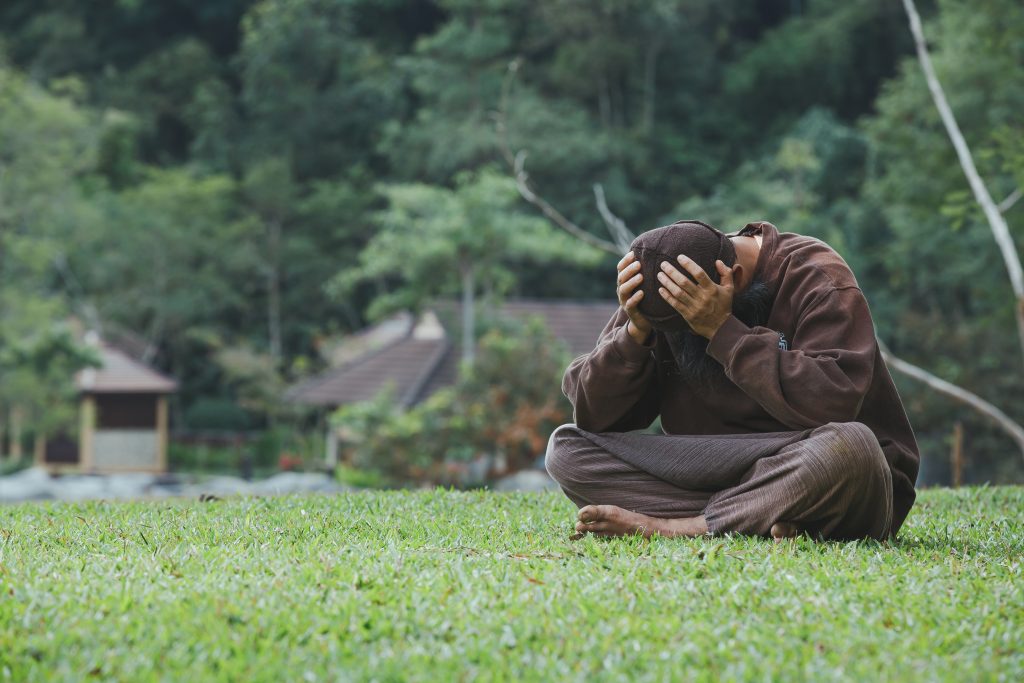
The Hidden Struggle: Men and Trauma
Men experience trauma at similar rates to women. They experience childhood abuse, neglect, violence, loss, and overwhelming stress. But men are often taught—explicitly and implicitly—to suffer in silence.
From an early age, many boys hear messages like:
- “Man up.”
- “Don’t be a baby.”
- “Boys don’t cry.”
- “Toughen up.”
- “Handle it yourself.”
These messages don’t just suppress emotion—they silence pain and prevent healing. The result? Millions of men carry unhealed trauma that affects every aspect of their lives.
Dr. Maté speaks to this: “Many men have been taught that having feelings is a weakness. But the real weakness is being disconnected from yourself. True strength is the courage to feel, to heal, and to ask for help.”
How Trauma Shows Up Differently in Men
While trauma affects everyone, social conditioning means it often expresses differently in men.
1. Anger as a Cover Emotion
Anger is often the only emotion men feel “allowed” to express. Underneath the anger, there is usually:
- Sadness
- Fear
- Shame
- Grief
- Helplessness
What it looks like: Road rage, irritability, explosive outbursts, or a constant low-grade frustration that never lifts.
The trauma connection: Anger creates a sense of power and control—feelings that were absent during traumatic experiences. It’s a protective shield over deeper pain.
2. Emotional Numbness and Disconnection
Many men describe feeling “numb,” “empty,” or “not there.” They go through the motions—work, family, responsibilities—but don’t feel truly alive.
What it looks like: Difficulty connecting with emotions, feeling disconnected from loved ones, not knowing what they feel or want.
The trauma connection: Numbness is dissociation—the mind’s way of protecting itself from overwhelming pain. But when you numb the pain, you also numb joy, love, and connection.
3. Hyper-Independence
“I don’t need anyone.” “I handle things myself.” “Asking for help is weak.”
These beliefs keep men isolated when they most need support.
What it looks like: Never asking for directions (literal or metaphorical), struggling to rely on others, feeling trapped by needing help.
The trauma connection: If early caregivers were unreliable or hurtful, relying on others felt dangerous. Hyper-independence was survival—but now it’s isolation.
4. Risk-Taking and Self-Destruction
Some men act out their pain through high-risk behaviors:
- Substance use or alcohol abuse
- Reckless driving
- Dangerous sports or activities
- Gambling
- Promiscuity
The trauma connection: These behaviors can be attempts to feel something (when numb) or to court the danger that feels familiar. They can also be unconscious forms of self-punishment.
5. Workaholism and Overachievement
Staying busy keeps painful feelings at bay. Many men pour themselves into work, achievement, or physical fitness—not from passion, but from avoidance.
What it looks like: Never stopping, unable to rest, defining self-worth by productivity, feeling anxious when not “doing.”
The trauma connection: Staying busy prevents the mind from wandering to painful places. Achievement becomes proof of worth—but it’s never enough.
6. Relationship Struggles
Unhealed trauma affects how men connect with partners, children, and friends:
- Emotional distance.
- Difficulty with intimacy.
- Conflict avoidance or escalation.
- Repeating patterns from parents’ relationship.
- Struggling to express love and need.
The Cost of Unhealed Trauma in Men
When men don’t heal, the costs are staggering:
- Higher rates of substance abuse and addiction.
- Increased suicide rates—men die by suicide nearly 4x more often than women.
- Shorter life expectancy due to stress-related illness.
- Broken relationships and family disconnection.
- Passing trauma to children through unhealed patterns.
- Loneliness and isolation.
Why Men Don’t Seek Help
Understanding the barriers is the first step to breaking them:
| Barrier | What It Sounds Like |
| Social conditioning | “Men don’t go to therapy.” “Handle it yourself.” |
| Fear of weakness | “If I admit I’m struggling, I’m not a real man.” |
| Not knowing how | “I don’t even know what I feel. How do I talk about it?” |
| Shame | “What happened was my fault.” “I should be over it.” |
| Lack of role models | “I don’t know any men who’ve done this.” |
| Practical barriers | Time, money, not knowing where to start |
The Strength in Seeking Help
Here’s what society gets wrong: Seeking help is not weakness—it is profound strength.
Real strength looks like:
- Facing what happened to you.
- Naming your pain instead of drinking it away.
- Asking for support instead of suffering alone.
- Healing so you can be present for those you love.
- Breaking cycles your father and grandfather couldn’t.
What Strong Men Do
Strong men:
- Feel their feelings (and survive).
- Apologize when they’re wrong.
- Ask for directions—literal and metaphorical.
- Cry when something hurts.
- Say “I need help”.
- Go to therapy.
- Hold their children with tenderness.
- Tell their partners they’re scared sometimes.
- Heal—so the next generation doesn’t have to.
What Healing Can Look Like for Men
1. Learning to Feel Again
Healing means gently reconnecting with emotions. Not all at once, not in overwhelming ways—but slowly, safely, with support.
What changes: You notice when you’re sad instead of just angry. You feel joy without waiting for the other shoe to drop. You cry and don’t fall apart.
2. Understanding Your Anger
Instead of being run by anger, you learn what’s underneath it. You discover the fear, grief, or shame that anger was protecting.
What changes: You still get angry—but now you have choice. You can express it appropriately, and you can also access the deeper feelings that need attention.
3. Allowing Connection
Healing means letting people in. Trusting, even when it’s scary. Relying on others without shame.
What changes: Relationships deepen. You feel less alone. You discover that vulnerability doesn’t destroy you—it connects you.
4. Finding New Definitions of Strength
You redefine what it means to be a man—on your own terms, not your father’s or society’s.
What changes: You feel free. You stop performing and start living. You become the man you want to be.
Men’s Experiences with Trauma
Childhood Trauma: Many men carry wounds from childhood—abuse, neglect, witnessing violence, losing a parent, or simply never feeling seen or valued by their fathers.
Combat and Military Service: For veterans, the trauma of combat, loss, and survival creates deep wounds that are often carried in silence.
Workplace Stress and Pressure: The pressure to provide, succeed, and never show weakness creates chronic stress that erodes mental health.
Loss and Grief: Men are often expected to “move on” quickly from loss—a parent, a partner, a child. Unprocessed grief becomes depression, anger, or numbness.
Relationship Trauma: Divorce, betrayal, or growing up watching parents in toxic relationships leaves deep marks.
Myth vs. Fact
| Myth | Fact |
| “Therapy is for weak people.” | Therapy is for brave people who want to heal. |
| “I should be able to handle this myself.” | You’ve been handling it alone—and look what it’s costing you. |
| “Talking won’t change anything.” | Talking, with the right support, changes everything. |
| “Real men don’t cry.” | Real men feel the full range of human emotion. |
| “My problems aren’t that bad.” | If it’s affecting your life, it’s bad enough. |
How Counselling Helps Men Heal
At UD Wellness, we understand that men may approach counselling differently. Our approach is:
1. Practical and Goal-Oriented: We respect that many men want to see progress. We work with you to identify goals and track growth—while also creating space for deeper exploration.
2. Respectful and Non-Judgmental: You won’t be told you’re “too shut down” or pressured to emote before you’re ready. We meet you where you are.
3. Trauma-Informed: We understand that symptoms—anger, numbness, avoidance—are adaptations, not character flaws. We treat the root, not just the surface.
4. Strength-Based: We see your resilience. You’ve survived hard things. Now let’s build on that strength to heal.
What Men Say After Starting Counselling
“I didn’t realize how heavy everything was until I started putting it down.
“My wife asked me to come for years. I wish I’d come sooner—for myself, not just for her.”
Real Strength Is Seeking Support
You’ve been carrying this alone for too long. It’s time to put it down.
We understand the unique ways trauma affects men—and we know how to support genuine healing. You don’t have to figure it out alone. You don’t have to keep suffering in silence.